
Earthquake Early Warning in Southeast Asia
Background
Under long-term regional resilience and infrastructure strategies, countries across Southeast Asia are working to reduce losses from natural disasters and climate-related hazards.
Significant seismic and tsunami events in recent years have resulted in substantial loss of life, infrastructure damage, and long-term socio-economic disruption. These include the 2004 magnitude 9.2 Indian Ocean earthquake and tsunami, as well as other damaging regional earthquakes that have highlighted the continued exposure of many areas across Southeast Asia to seismic risk.
In response, governments and national agencies throughout the region are strengthening preparedness by developing comprehensive, high-quality earthquake and tsunami monitoring capabilities aligned with international standards. These initiatives aim to enhance earthquake detection, improve public information services, and support long-term disaster resilience.

Project objectives
The project aim was to significantly upgrade the national seismic monitoring and early warning capability of a Southeast Asian country through the following objectives:
- Upgrade and replace the high-performance earthquake and tsunami monitoring network deployed since 2015, while expanding coverage into previously unmonitored high-risk regions
- Enhance operational response capability by deploying mobile seismic stations for aftershock and microearthquake monitoring
- Integrate existing automatic earthquake detection systems (in operation since 2005) with both domestic and international monitoring networks, improving continuous data acquisition, analysis, and system performance
- Provide timely, accurate earthquake information and alerts to the public, government agencies, and private sector stakeholders
- Establish a national earthquake data centre to support engineers, regulators, researchers, and students with seismic and ground acceleration datasets
- Increase public confidence and safety assurance for residents and visitors in seismically active regions
Instrumentation requirements
Over the past decade, Güralp has supplied a broad suite of 106 broadband seismometers, 64 borehole systems, 128 accelerometers and 169 digitisers to support both permanent and mobile monitoring requirements.
The instrumentation had to meet specific operational requirements:
- Low-noise borehole performance was required in some locations to minimise cultural noise and deliver high-fidelity seismic data in urban and semi-urban environments
- Borehole units capable of operating at ±10° were required to ensure reliable installation in variable geological conditions
- Full waveform coverage: Each surface station needed to integrate both a broadband seismometer and an accelerometer to ensure the full seismic event spectrum is captured
- A mobile capability was needed for rapid-deployment scenarios, enabling efficient monitoring of aftershocks and microseismic activity during post-event response phases
- The earthquake data management sytem hardware and software must be compatible with the existing system linking and exchanging data with the international earthquake monitoring network using SeedLink.
Güralp instrumentation supplied:
Borehole and weak-motion instruments
- The 3T is our observatory grade seismometer, providing the highest quality, long-period data in quiet vault environments
- The 3T5T borehole instrument combines the 3T sensor with an acceleration sensor in a single borehole instrument, capable of
measuring the full seismic spectrum and is available with a 12.5 degree tilt tolerance
- The 3ESPC is a more portable broadband seismometer, ideal for long-term and temporary installations in areas with low to moderate noise levels

3T sensor

3T5T borehole sensor

3ESPC sensor
Medium-motion instruments
- Certis and Certimus are robust sensors designed for direct burial or vault deployments. Both feature adjustable long-period corners and can operate effectively at +/- 90 degrees from level.
- Certimus was supplied with a rugged deployment backpack to ensure safe transportation across rough terrains and to form a rapid aftershock monitoring kit

Certimus sensor

Certimus rugged backpack

Certis sensor
Strong-motion instruments (Accelerometers)
- The Fortis analogue and Fortimus digital accelerometers, which both feature adjustable gain options, were integrated into surface stations to deliver strong-motion monitoring alongside the weak-motion monitoring to ensure the full seismic spectrum is captured in the event of an earthquake

Fortis sensor

Fortimus sensor
Digitisers
- The Minimus+ and Affinity digitisers both offer sophisticated ADC and advanced instrument and data management tools
- Both digitisers support the SeedLink protocol and are fully compatible with 3rd party analysis software such as SeisComP and Earthworm

Minimus+

Affinity
Deployment and technical support
A structured programme of installation support and training was delivered throughout the deployment phases:
- On-site installation and technical training visits at both headquarters and field locations
- An experienced Güralp engineer spent 30 days supporting the deployment phases, providing hands-on installation training and transferring operational expertise to the distributor team
- Remaining installations were completed by our local distributor Asiamet
- The most recent phase commenced in 2025 with batch shipments beginning in August 2025, deployment activities were completed during late 2025 and early 2026

Waveforms from installed instrumentation

Certimus installation with ‘System OK’ status

Aligning a 3T sensor to North

A 3T deployment in a dedicated vault enclosure onto a concrete plinth installed onto bedrock

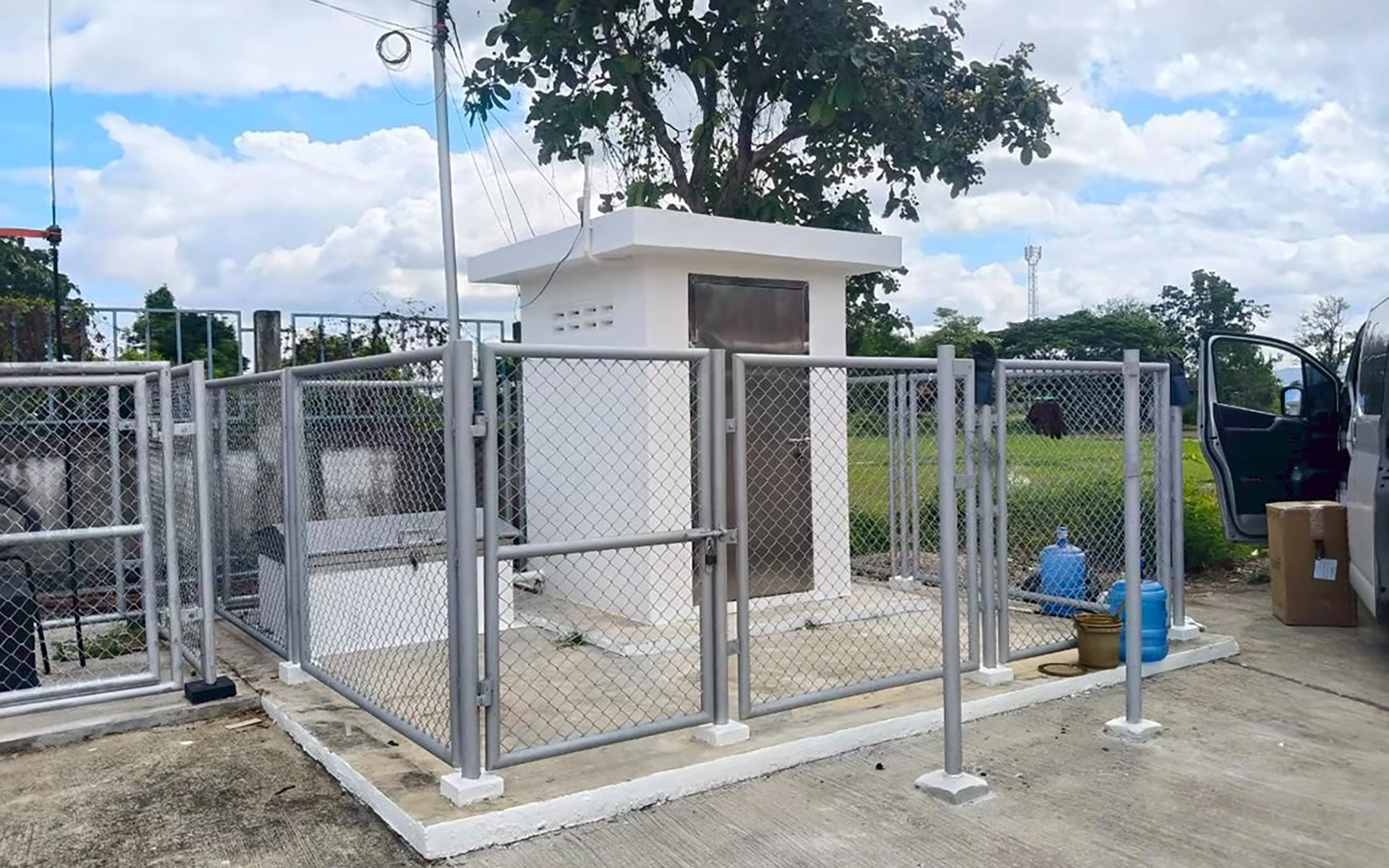
Digitiser and breakout boxes are secured in a separate cabinet for easy access without disturbing the instrumentation and to minimise heat and noise contamination
Outcomes
The most recent phase was successfully installed by the end of February 2026, with formal acceptance completed in early March 2026. The project was delivered smoothly, supported by efficient manufacturing turnaround, coordinated field engineering support, and responsive technical assistance from the technical support team, ensuring rapid resolution of any installation or operational issues.
The national seismic monitoring upgrade delivers several key long-term outcomes:
- Improved national earthquake detection capability
- Providing higher-resolution and lower-noise seismic data across the countries most vulnerable regions
- Enhanced aftershock monitoring with the rapid deployment mobile systems improving situational
- Strengthened public warning and communication systems with faster and more reliable dissemination of earthquake and tsunami alerts to the public and stakeholders
Improved monitoring coverage contributes directly to risk reduction and increased confidence in high-risk regions.